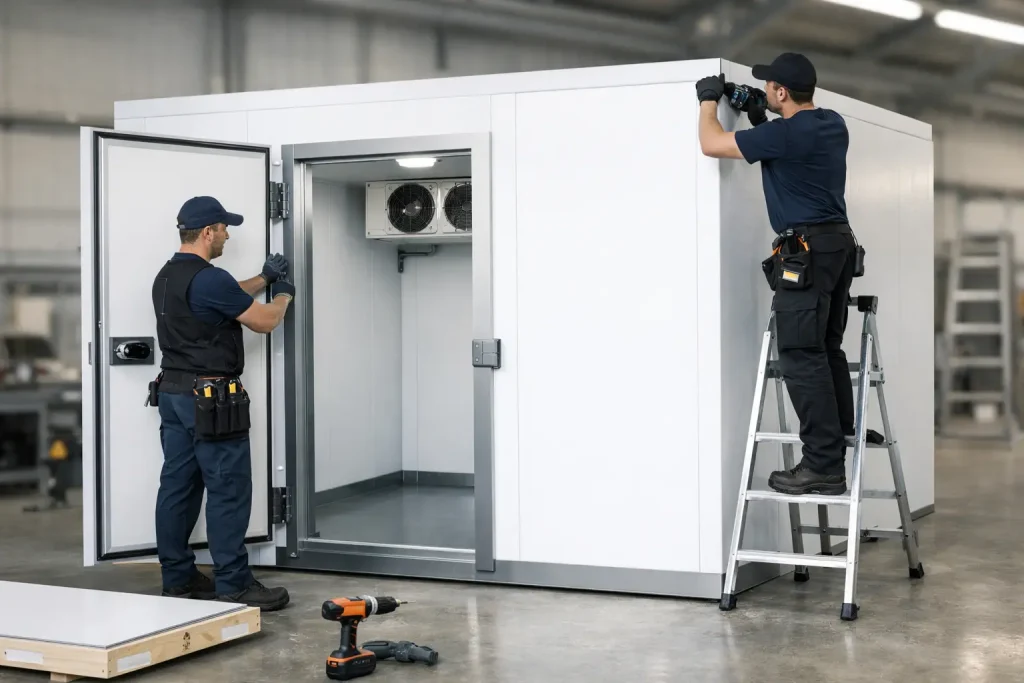
When a cold room is undersized, badly sited or rushed into place without proper planning, the problems show up fast. Stock temperature drifts, energy bills climb, doors ice up and staff lose time fighting a room that should be working quietly in the background. This cold room installation guide is written for UK businesses and property decision-makers who need the job done properly the first time.
For restaurants, food retailers, pharmacies, hospitality venues and managed commercial buildings, cold room performance is not just about keeping products cool. It affects compliance, operating costs, workflow and business continuity. A well-installed room protects stock, supports faster service and reduces the chance of an expensive emergency callout at the worst possible moment.
What a cold room installation guide should cover first
Before anyone talks about panels, condensing units or controller settings, the first question is simple – what does the room need to do every day? A cold room for boxed produce in a back-of-house kitchen has very different demands from a walk-in freezer serving a busy catering operation or a temperature-controlled room in a healthcare setting.
Temperature range, product type, loading pattern and footfall all matter. So does the way the room will be used across the day. If the door is opening every few minutes during service, the system needs to cope with warm air ingress. If stock arrives in bulk and still carries heat load from delivery, the cooling capacity has to reflect that too. This is where many installations go wrong. The room may look the right size, but the refrigeration duty is not matched to real use.
A proper specification also looks at future demand. If your operation is growing, installing a room that only just copes today can become a false economy within months. In many cases, a little more planning at the start avoids costly adaptation later.
Site assessment before cold room installation
The room itself is only one part of the system. Access, drainage, ventilation, power supply and surrounding ambient conditions all affect how smoothly the installation will go and how reliably the cold room will run once handed over.
Floor loading is a common consideration. If pallet trucks, shelving systems or heavy stock will be used, the base construction has to suit the weight and traffic. Ceiling height matters too, particularly in plant rooms, service yards and older commercial premises where structural limits can complicate installation.
Location has a direct impact on efficiency. Putting a cold room next to a heat source, in direct sunlight, or in a congested back-of-house area with poor airflow can increase running costs and place unnecessary strain on the equipment. The condensing unit also needs proper ventilation and service access. Hiding it in a tight corner may save space on paper, but it creates maintenance problems later.
Noise can be another factor, especially in mixed-use properties or residential settings. Plant selection and placement should take occupants and neighbours into account from the start, not after complaints begin.
Choosing the right room build and insulation
Cold room panels are not all equal, and neither is the right thickness for every application. The target temperature, room size and usage pattern will usually determine the level of insulation required. Chilled applications and freezer applications need different approaches, especially where low-temperature performance and condensation control are concerned.
Panel joints, vapour sealing and floor details deserve close attention. If the envelope is poorly assembled, the room may suffer from air leakage, moisture ingress and ice formation. Those are not minor finishing issues. They affect efficiency, hygiene and the life of the system.
Floor construction often depends on whether the room is installed onto an existing slab or built with an insulated floor section. In freezer rooms, underfloor heating may be required to prevent frost heave beneath the slab. That is the sort of detail that can be missed when installations are priced too quickly or designed without enough technical input.
Door choice matters more than many buyers expect. Hinged and sliding doors each have their place. The right option depends on available space, traffic flow and how often the room is accessed. If staff are moving trolleys in and out all day, impact resistance, threshold detail and reliable sealing should be part of the decision, not an afterthought.
Refrigeration plant selection and controls
The refrigeration system should be matched to the actual thermal load, not guessed from room dimensions alone. Product load, ambient conditions, door openings, lighting, evaporator sizing and defrost requirements all feed into the design. A unit that is too small will struggle and run constantly. One that is too large can short cycle, waste energy and wear components unnecessarily.
For most commercial users, reliability and serviceability are just as important as capacity. Equipment should be selected with parts availability, maintenance access and operating efficiency in mind. Energy-efficient options can reduce running costs, but only if the full system is installed and commissioned correctly.
Controls are often where day-to-day usability is won or lost. Clear temperature display, alarm functions, defrost management and sensible set-up make a difference to operators. Where a site already uses smart controls or building management systems, integration may also be worth considering. It can help facilities teams track performance, identify faults earlier and keep tighter control of energy use.
There is always a balance to strike here. A basic system may cost less upfront, while a more advanced control package can offer better visibility and efficiency over time. The right answer depends on the site, the criticality of the stock and how closely the system needs to be monitored.
Compliance, hygiene and safe installation practice
A cold room is not just a box with cooling attached. It sits within a framework of electrical safety, refrigeration standards, food hygiene requirements and workplace considerations. Installers need to account for safe isolation, condensate management, emergency door release, adequate lighting and suitable materials for the environment.
If the room is being used for food storage, cleanability matters. Internal finishes, coving details and drainage arrangements should support hygiene procedures, not make them harder. If the application is pharmaceutical or otherwise temperature-sensitive, the level of validation and monitoring may need to be higher.
Ventilation and refrigerant considerations also have to be handled properly. Plant areas must be suitable for the equipment being used, and the installation should reflect current regulations and good engineering practice. This is one of the clearest reasons to use experienced refrigeration engineers rather than treating the project as a simple fit-out package.
Installation day and commissioning
Even a well-designed system can disappoint if the installation is rushed. Good installers will sequence the work carefully, especially where businesses need to stay operational during the project. Access routes, delivery timing, waste removal and plant positioning should all be planned to minimise disruption.
The panel build, door fit, evaporator location, pipework runs and drainage all need accuracy. Shortcuts here tend to show up later as leaks, warm spots, icing or repeated service issues. Pipe insulation, support spacing and cable routing may not be the most visible parts of the job, but they tell you a lot about the standard of workmanship.
Commissioning is where the installation is proven, not just switched on. Pressures, temperatures, controls, defrost cycles and alarm functions should all be checked and recorded. Staff should also be shown how to operate the room properly – from basic control use to what to do if an alarm appears. A handover that leaves the client guessing is not a proper handover.
For many sites, this is also the right time to agree an ongoing maintenance plan. Companies such as AA Frost see the same pattern repeatedly: systems that are installed correctly and maintained routinely last longer, perform better and cause fewer disruptive failures.
Common mistakes that cost more later
The biggest mistake is buying on upfront price alone. A cheaper quote can look attractive until it leaves out structural preparation, proper plant sizing, drainage works, upgraded electrics or commissioning depth. Those missing elements rarely stay missing. They return later as variations, faults or energy waste.
Another common issue is poor allowance for usage. If your team props the door open during busy periods, the answer may not be telling staff to work differently. It may be adding strip curtains, changing traffic flow or rethinking door type. The best installation takes real behaviour into account.
Maintenance access is often overlooked as well. Units need space to be cleaned, inspected and repaired. If servicing the evaporator or condensing unit becomes awkward, routine maintenance may be delayed and faults may take longer to resolve.
How to get the best result from your cold room installation guide
Use this cold room installation guide as a starting point, but treat every site on its own merits. The right specification depends on your temperature requirement, building layout, stock profile, compliance obligations and the cost of downtime if the system fails.
A dependable installation partner should ask detailed questions, survey the site properly and explain trade-offs clearly. Sometimes the best option is a straightforward chilled room with practical controls. Sometimes the job calls for a more engineered solution with tighter monitoring, higher-grade insulation or plant redundancy. Either way, the goal is the same – stable temperatures, efficient operation and fewer surprises once the room is in service.
If you are planning a new cold room, think beyond the day it is fitted. The best systems are the ones that keep working quietly through busy service, seasonal peaks and long trading hours, without becoming the reason your operation slows down.